 SimSmsBox
 Quick answer: An OTP bot is an automated scam tool that tricks you into reading out a one-time code you legitimately received. The attacker already has your password and triggers a real login, so a genuine SMS or app code arrives on your phone; the bot then places an automated call or message pretending to be your bank’s fraud line and pressures you to “confirm the code.” The code is real — the caller is not. No code you type to an unexpected caller is ever safe.
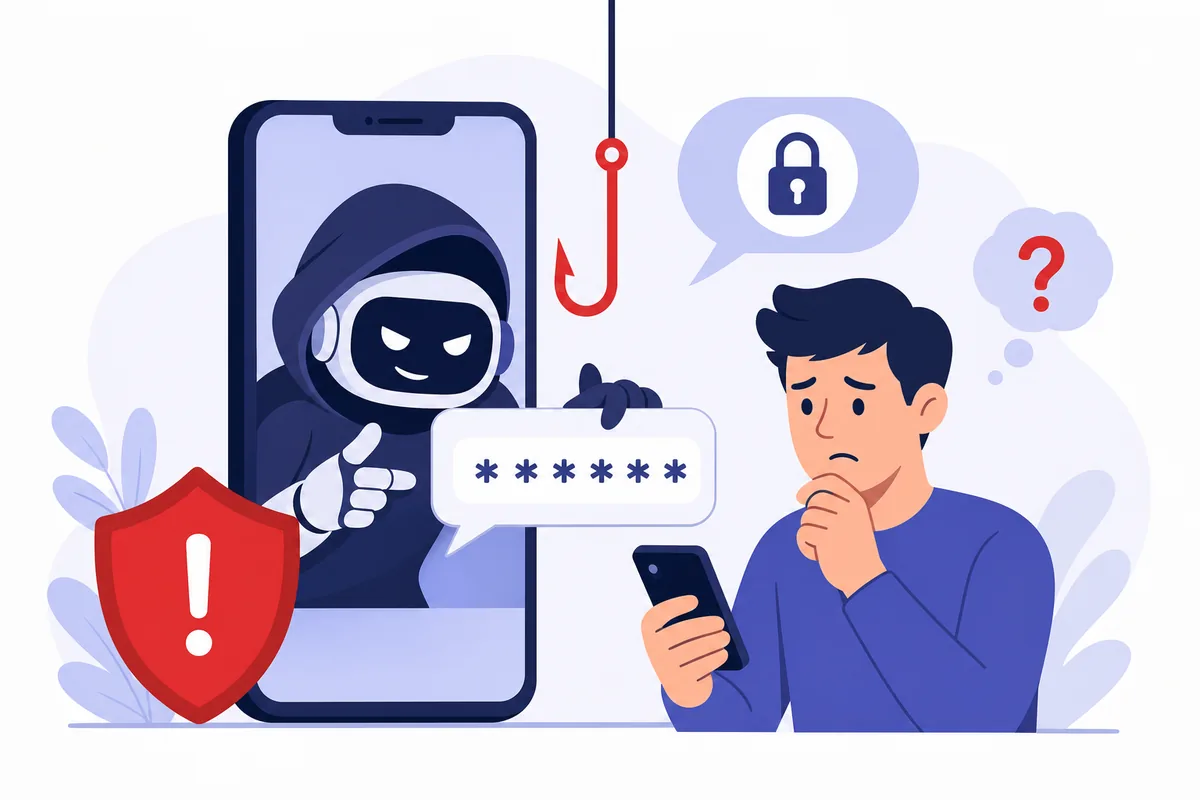
One-time codes were supposed to make stolen passwords useless. OTP bots are the criminal workaround: instead of hacking the code, they get you to hand it over. It’s social engineering wearing an automation costume, and it’s worth understanding because it targets the one link no algorithm can protect — the human reading the SMS OTP code.
1. How an OTP bot attack actually unfolds
The scam has a specific, repeatable shape:
- The attacker already has your username and password (from a leak or a phishing page).
- They try to log in, which triggers the service to send you a real verification code.
- Within seconds, an automated bot calls or messages you, spoofing a trusted name — your bank, a delivery service, a big platform.
- A polished, scripted voice says it detected fraud and needs you to “verify your identity” by reading back the code just sent.
- You read it out. The bot relays it to the attacker, who completes the login.
The genius — and the danger — is timing. The code really did arrive, so it feels legitimate. The bot just harvests it faster than you can think twice.
2. Why it beats normal caution
| Signal you rely on | Why the bot defeats it |
|---|---|
| ”The code is real” | It is — the attacker triggered a genuine login |
| ”They knew my name/bank” | Bought from the same leak as your password |
| ”It sounded professional” | Fully scripted, automated voice |
| ”It came right when I expected security stuff” | The attacker controls that timing |
This is why OTP bots work on careful people. Every surface signal lines up. The only thing that doesn’t: legitimate companies never call to ask for a code they just sent you.
3. The one rule that stops all of them
A one-time code is a secret between you and the service you’re logging into — nobody else ever has a reason to hear it. That single principle defeats every variation:
- Banks, platforms, and couriers will never phone you to collect a verification code.
- If a code arrives that you didn’t request, someone has your password — change it, and don’t share the code. This overlaps with defending against SIM swap attacks, another way attackers chase your codes.
- A code read to anyone who contacted you is compromised. Hang up and log in yourself.
Turning on an authenticator app or stronger 2FA helps, but note the bot can adapt its script to app codes too — the human rule above is the real defense.
4. What this means if you receive codes online
If you use an online number to receive verification codes without a SIM, the same rule applies with a twist: codes should only ever appear in your panel because you just triggered a login yourself. An unexpected code, or any “support agent” asking you to relay one, is the scam — not a service you’re using. Because you initiate every legitimate code, an unprompted one is an especially clear red flag.
FAQ
Q: If the code is genuine, how is this phishing? The code is real, but the caller is the fraud. They’re phishing the code out of you in real time to finish a login they started with your stolen password.
Q: Does using an authenticator app make me immune? It removes SMS-interception risk, but a bot can still script “read me the code from your app.” The rule — never share a code with someone who contacted you — is what actually protects you.
Q: I read out a code to a caller. What now? Assume the account is compromised: change the password immediately, revoke active sessions, and contact the real company through its official number or app.
Takeaway
An OTP bot doesn’t break the code — it breaks your trust, in real time, right as a genuine code lands. The defense isn’t technical: no real company ever calls to collect a code it just sent, so any code shared with an inbound “agent” is a code handed to a thief. You request your codes; nobody should ever ask you to recite one.