 SimSmsBox
 Quick answer: An SMS verification service is a legal technology, and using one to protect your privacy or receive one-time codes is generally fine. Whether it becomes illegal depends on what you do with it. Normal sign-ups and privacy protection are compliant; fraud, mass account farming, bypassing risk controls, or impersonating others can violate platform terms and even the law.
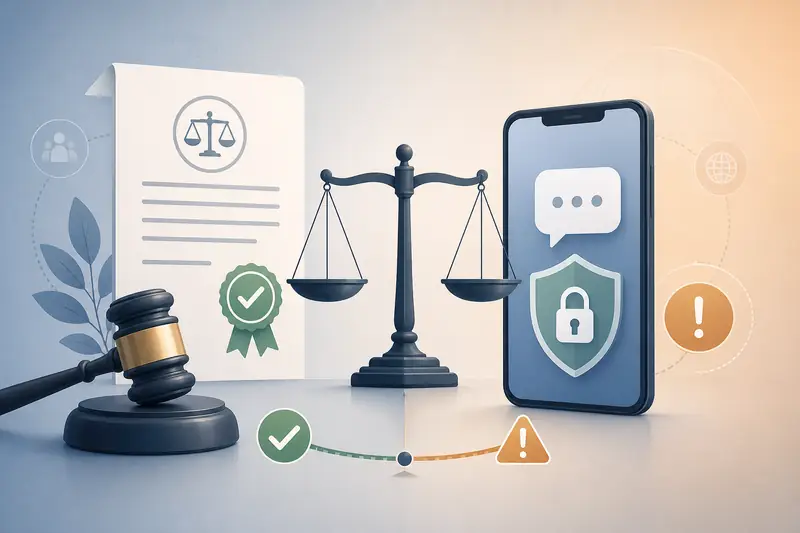
“Is it legal to use an SMS verification service?” is a common worry before ordering. This guide separates “the tool itself” from “how you use it,” so you can stay on the right side of the line — and know which red lines never to cross.
1. A legal tool is not a license to do anything
An SMS platform provides a neutral technical service — receiving text verification codes — just like email, a VPN, or a cloud server. What actually determines compliance is your purpose and method. The same platform is compliant when used to protect privacy and illegal when used for fraud. The difference is the person, not the tool.
2. Generally compliant use cases
- Privacy protection: avoid handing your real number to every website by receiving a one-time password (OTP) on a temporary number.
- Registering overseas services: when you have no local number, receive SMS online to complete phone verification.
- Developer testing: test SMS notifications, sign-up flows, and so on.
- Cross-border e-commerce: manage multiple accounts within what the platform allows.
What these share: no harm to others, no fraud, and no breach of a target platform’s hard prohibitions.
3. Red lines that can be illegal or against the rules
| Behavior | Risk |
|---|---|
| Sign-ups tied to fraud or money laundering | Criminal offense, serious consequences |
| Impersonating another person’s identity | Illegal; may be fraud or infringement |
| Mass registration for abuse or fake engagement | Violates platform terms, possibly illegal |
| Bypassing sanctions/geoblocks for illegal trade | Serious legal liability |
| Harassment or spam blasting | Violates anti-spam regulations |
Note: “the platform didn’t catch it” does not mean it’s legal. Stay away from anything involving money, identity theft, or fraud.
4. Platform terms vs. the law: two separate layers
- Terms of service: many apps forbid virtual/temporary numbers in their user agreement. Registering via an SMS service may breach those terms and get you banned — but that’s usually a contract issue, not a crime.
- The law: only when your actions touch fraud, infringement, laundering, or illegal trade does it rise to illegality.
In short: breaking terms → possible ban; breaking the law → legal liability. Keep the two distinct.
5. Tips for compliant use
- Use it for legitimate purposes only: normal sign-ups and privacy — never fraud.
- Use your own number for important/KYC accounts: anything money- or identity-related shouldn’t use a temporary number. See Real SIM vs virtual numbers.
- Follow local law and platform terms: rules vary by country — go by your own jurisdiction.
- Respect others’ privacy: never register or verify with someone else’s information.
FAQ
Q: Is registering an account via an SMS service illegal? Usually not, as long as it’s for legitimate sign-up and doesn’t involve fraud or impersonation — though it may breach the target app’s terms of service.
Q: Is the SMS platform itself legal? As a technical service, yes. What matters is how users use it.
Q: Can I be held liable just for using one? Legitimate use generally won’t. Liability falls on those who use it for fraud, laundering, or other crimes.
Takeaway
An SMS verification service is a legal technology, and compliance depends on how you use it. Privacy protection and normal sign-ups are safe; the moment it’s used for fraud, impersonation, or abuse, it crosses platform terms and legal red lines. Use the tool in the right place — that’s both self-protection and the foundation of long-term safe use.
This article is general information, not legal advice. For specific compliance questions, rely on the laws of your country/region and the terms of the target platform.