 SimSmsBox
 Quick answer: Yes — an eSIM can receive SMS verification codes exactly like a physical SIM, because to the network it is a real mobile subscription. The catch: most travel/data-only eSIMs don’t include a phone number or SMS, so they can’t receive OTPs. You need an eSIM plan that provisions a real number with texting. For quick, throwaway sign-ups, a dedicated online receiving number is often simpler.
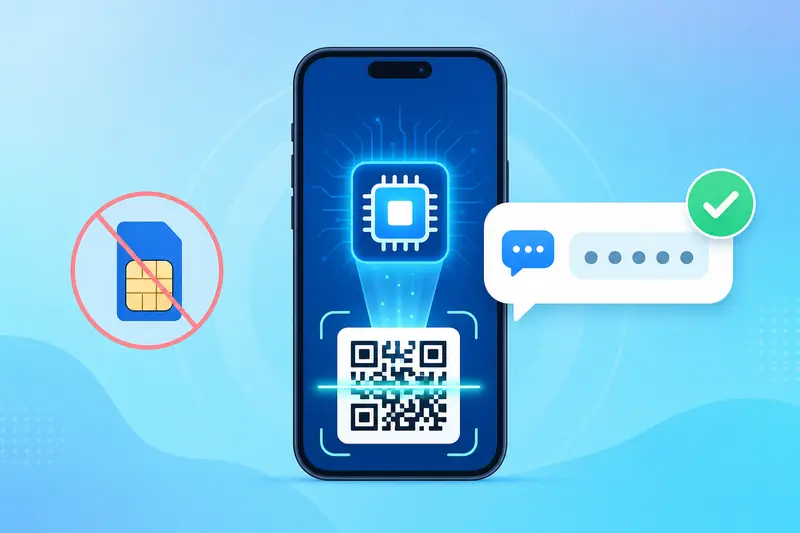
eSIMs have made it easy to add a line without a plastic card, and many people wonder if that line can catch their login codes. The short version: it depends entirely on whether the eSIM plan comes with a real, textable phone number. Here’s how it compares with a real SIM versus a virtual number.
1. How an eSIM handles SMS
An eSIM is just a SIM profile downloaded into your phone’s embedded chip instead of a physical card. When it activates a normal mobile plan, it behaves identically to a physical SIM:
- It registers on the carrier network with a real IMSI and phone number.
- It receives SMS on that number, including one-time codes.
- Autofill and the Messages app work as usual because the code lands on-device.
So an eSIM tied to a standard voice+text plan can receive verification codes with no special steps.
2. Why some eSIMs can’t receive codes
The problem is the plan type, not the eSIM technology:
- Data-only travel eSIMs (common for tourism) often provide no phone number, so there is nothing to text.
- Some regional eSIMs give a number that can’t receive international A2P messages.
- If a plan uses a number type that platforms treat like VoIP, codes may be blocked — see what a non-VoIP number is.
3. eSIM vs physical SIM vs online number
| Option | Receives OTP? | Best for |
|---|---|---|
| eSIM (voice+text plan) | Yes | Your own long-term line |
| eSIM (data-only) | Usually no | Travel data |
| Physical SIM | Yes | Traditional main number |
| Online receiving number | Yes | Quick or throwaway sign-ups |
For a primary personal account, an eSIM with a real number is great. For one-off registrations you don’t want tied to your identity, an online number is faster and protects phone-number privacy.
4. Tips if codes don’t arrive on your eSIM
- Confirm the plan actually includes a phone number and SMS, not just data.
- Make sure the eSIM line is set to receive texts and has signal/roaming enabled.
- Check the number’s country is supported by the platform you’re verifying with, as covered in improving your success rate.
- Remember an eSIM number is still SMS-based, so it carries the usual SIM-swap and interception risks.
FAQ
Q: Can a free travel eSIM receive my verification code? Usually not — most travel eSIMs are data-only with no phone number, so there’s nothing to send an SMS to.
Q: Do platforms treat eSIM numbers as suspicious? Not because it’s an eSIM. What matters is the number’s type and country, not whether the SIM is physical or embedded.
Q: eSIM or an online number for a quick sign-up? For a fast, disposable verification, an online receiving number is simpler; keep your eSIM for your main personal line.
Takeaway
An eSIM receives SMS verification codes perfectly well as long as its plan includes a real, textable phone number — the embedded-vs-physical distinction is irrelevant to the network. If your eSIM is data-only, or you just need a quick throwaway code, a dedicated online receiving number is the more practical choice.