 SimSmsBox
 Quick answer: A2P SMS means application-to-person SMS — texts sent automatically by software, not typed by a human. Almost every verification code, order alert, and marketing text you get is A2P. It’s the opposite of P2P (person-to-person) SMS, the normal texts you send friends. A2P runs on dedicated business routes with sender IDs, filtering, and per-message pricing, which is exactly why your OTP arrives in seconds.
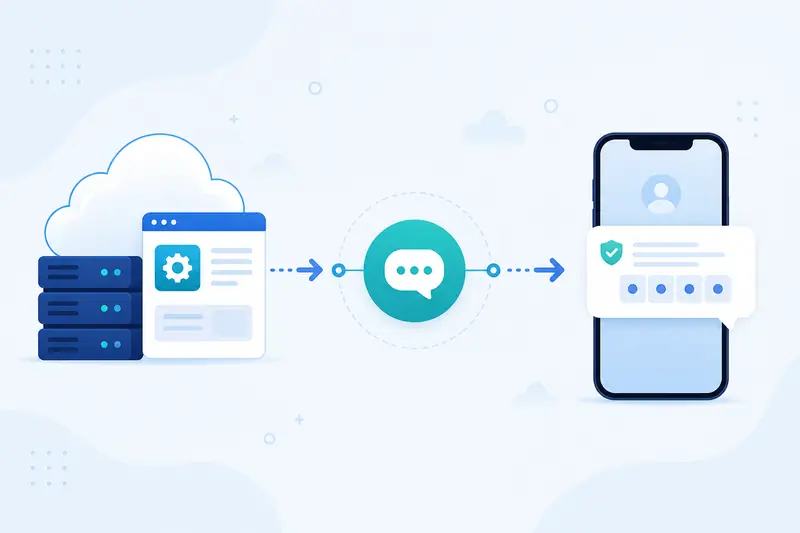
Every time an app “texts you a code,” that message is A2P SMS. Understanding the term explains a lot about why codes arrive fast, why they sometimes don’t, and why services care so much about number types. Here’s the plain-English version.
1. A2P vs P2P
- P2P (person-to-person): you typing a text to a friend. One human to another, over standard consumer routes.
- A2P (application-to-person): software sending a text to a person — a verification code, a delivery notice, a bank alert. No human types it; an application triggers it through a messaging platform.
The one-time code you get at sign-up is the classic A2P example.
2. How an A2P message actually reaches you
- An application decides to send (e.g., you requested a code).
- It calls a messaging provider’s API with your number and the text.
- The provider routes the message to an aggregator and then to your mobile carrier.
- Your carrier delivers it to your handset as an SMS.
Each hop can add delay or filtering, which is why delivery quality depends heavily on the route and the number type — background covered in SMS number sourcing.
3. Why A2P has its own rules
Because it’s automated and high-volume, A2P is treated differently from personal texting:
| Aspect | A2P SMS | P2P SMS |
|---|---|---|
| Sender | Software/application | A person |
| Volume | High, automated | Low, manual |
| Sender identity | Short code, sender ID, or 10DLC | Your own number |
| Pricing | Per-message, business rates | Consumer plan |
| Filtering | Heavy anti-spam/fraud checks | Light |
Those rules exist partly to fight abuse like SMS pumping fraud, where bad actors farm automated verification traffic.
4. Why this matters for receiving codes
A2P routes are tuned for exactly one thing: delivering automated messages reliably. That’s good news when you receive verification codes — but it also means carriers and platforms actively score the traffic and the destination number. If a number looks low-quality, A2P filtering can slow or block the code. Practical implications:
- Number type affects delivery, which is why real SIM vs virtual numbers is a real consideration.
- Temporary delivery hiccups are often route/filtering issues, not your fault — a retry can help.
- Whether A2P or not, the code is sensitive; follow good phone-number privacy habits.
FAQ
Q: Is a verification code A2P or P2P? A2P. It’s generated and sent by an application, not typed by a person.
Q: Does A2P mean it’s more expensive for me? No — the per-message cost is paid by the sending business, not the recipient.
Q: Why do some A2P codes never arrive? Usually A2P filtering or a poor route between the provider, aggregator, and your carrier — often tied to number quality.
Takeaway
A2P SMS is simply the automated, business side of texting — the machinery behind every verification code, alert, and notification. Knowing it’s A2P explains why codes are fast, why number type and routing decide whether they arrive, and why the whole system is built around delivering one-time codes reliably.